12-month Invisalign correction of mild crowding and midline shift
Overlapping lower front teeth and a slightly off-centre smile line, made more noticeable in wedding photographs.
- City
- Mumbai
- Duration
- 12 months
- Age group
- 26-30
- Cost band
- ₹2.9L to ₹3.4L (illustrative)
Written by GoInvisalign Editorial
Medically reviewed by Dr. Ananya Shah
MDS Orthodontics
Clinical summary
Patient overview
Clinical findings
- • 3 mm lower anterior crowding
- • 1.5 mm dental midline shift to the right
- • Class I molar and canine relationship
- • Healthy periodontium, no active decay
Diagnosis
Mild Class I malocclusion with lower anterior crowding and dental midline shift.
Treatment objectives
- • Resolve lower anterior crowding without extractions
- • Coincide dental and facial midlines
- • Maintain the existing molar occlusion
- • Deliver a bonded plus removable retention protocol
Treatment plan
- • 22 upper and 24 lower aligner stages with attachments on canines and premolars
- • Interproximal reduction of 0.3 mm across lower incisor contacts
- • Class II elastics were not required
- • One refinement round with 6 additional aligners
- • Fixed lingual retainer 3-3 plus Vivera night-time retention
Digital workflow
Technology used
- iTero 5D Plus
- ClinCheck Pro
- Vivera retainers
Before & after
Documented transformation
Drag the handle to compare month 0 with the debond image. Individual results vary.
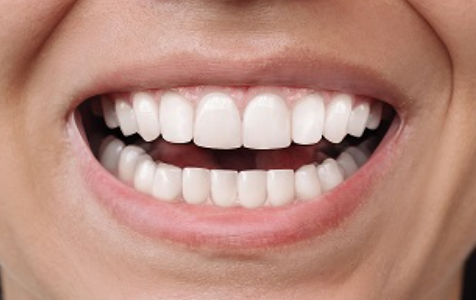
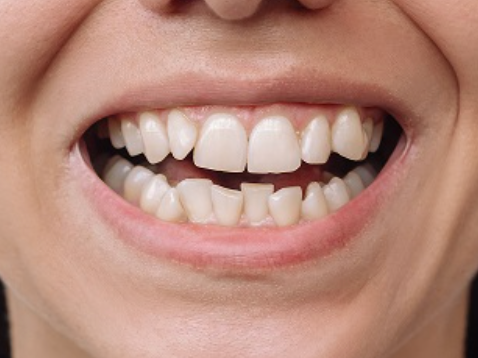
Photographs represent one individual case. Images are not a guarantee of future results. Outcomes vary with diagnosis, biology, treatment plan, compliance and retention. A qualified orthodontist must plan every case individually.
Treatment timeline
Milestones
Month 0
Records and ClinCheck approval
Photographs, iTero scan, panoramic radiograph and lateral cephalogram taken. ClinCheck approved after two revisions.
Month 3
Attachment bonding and first review
Attachments bonded on canines and premolars. Aligners tracking well; IPR staged for month 4.
Month 6
Mid-treatment review
Lower crowding visibly reduced; midline correction on track.
Month 9
Refinement scan
Impression scan for a 6-aligner refinement round to finalise the midline.
Month 12
Debond and retention
Attachments removed, bonded retainer placed and Vivera trays delivered.
Progress gallery
Documented visits
Month 0smile 
Month 6smile Month 12smile
Photographs represent one individual case. Images are not a guarantee of future results. Outcomes vary with diagnosis, biology, treatment plan, compliance and retention. A qualified orthodontist must plan every case individually.
Outcome
Outcome summary
Full closure of the midline discrepancy and complete alignment of the lower anteriors after one refinement round. Individual outcomes will vary based on diagnosis, biology and compliance.
Retention plan: Bonded 3-3 lower retainer plus nightly Vivera trays reviewed at 3, 6 and 12 months post-debond.
Patient experience
In the patient's words
"Nobody at work realised I was in treatment. By month 8 I was already smiling in photos without covering my mouth."
Patient advice: Set a phone reminder for wear time, the first two weeks are the hardest, after that it becomes muscle memory.
Doctor insights
Clinical commentary
Dr. Ananya Shah · MDS Orthodontics, Diamond Invisalign Provider
Rationale
A mild Class I crowding case in an aesthetically-conscious adult professional is a strong indication for clear aligners with a short refinement round.
Retention strategy
A bonded 3-3 retainer minimises long-term relapse risk in lower incisors, supplemented by night-time Vivera trays for the upper arch.
Alternatives considered
- • Ceramic labial fixed appliances would have shortened the finishing stage
- • Lingual fixed appliances were declined on comfort grounds
Learning points
- • Digital planning does not remove the need for a chairside review at month 3
- • Compliance dashboards from the aligner brand help catch drop-off early
Reasoning
Why this treatment was selected
A neutral summary of the planning trade-offs, presented for education, not endorsement.
A mild Class I crowding case in an aesthetically-conscious adult professional is a strong indication for clear aligners with a short refinement round.
Planning considerations
- Preserving the Class I occlusion ruled out extractions
- Small IPR was preferred over expansion given the arch form
Alternatives considered
- Ceramic labial fixed appliances would have shortened the finishing stage
- Lingual fixed appliances were declined on comfort grounds
Every case is diagnosed individually — a qualified orthodontist is the only source of a personal treatment plan.
Reality of treatment
Challenges encountered
Honest documentation of the friction and adjustments during this case.
- Compliance during a two-week international travel window at month 5
- Attachment debonding on tooth 23 required a mid-course replacement
Clinical reflection
Lessons learned
Educational takeaways for clinicians and informed patients.
- Attachment placement on rotated canines benefits from a supervised try-in appointment
- IPR in 0.1 mm increments improved tracking during the finishing stages
Media
Video testimonials
- Priya's 12-Month Invisalign Journey (Mumbai)
8 min · patient-story
Frequently asked
About this case
- Yes, there was a mild lisp during the first 4-5 days that resolved with normal speaking practice, which is consistent with published aligner adaptation studies.
Evidence
Research references
- 1. The Effect of Attachments on Aligner Tracking: A Prospective Study. Angle Orthodontist (2019). Read source
Explore
Every case starts with an in-person consultation
Photographs, scans and a clinician's assessment are the only way to know what your smile plan looks like.