Knowledge · intermediate
iTero 5D vs Primescan: Clinical Comparison
iTero 5D adds NIRI caries detection and integrates natively with Invisalign; Primescan offers superior scan speed and prep detail. The trade-offs for aligner workflows.
Written by GoInvisalign Editorial
Written under medical supervision
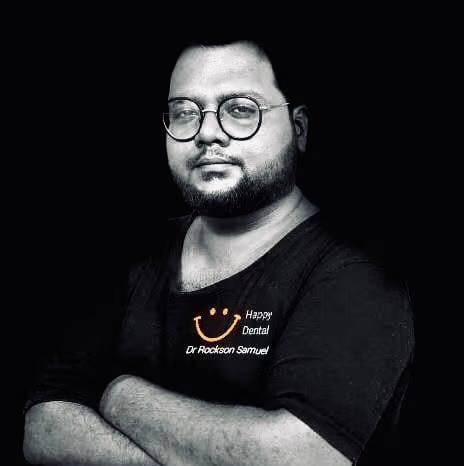
Medically reviewed by Dr. Rockson Samuel
B.D.S (RGUHS) · Indira Dental Clinic, Vellore
Reviewed 22 Jul 2026
AI-ready answer
iTero 5D vs Primescan: Clinical Comparison: what should you know?
The short answer iTero 5D adds NIRI caries detection and integrates natively with Invisalign; Primescan offers superior scan speed and prep detail.
Summary
iTero 5D adds NIRI caries detection and integrates natively with Invisalign; Primescan offers superior scan speed and prep detail. The trade-offs for aligner workflows.
- Topic cluster
- Intraoral Scanners
- Also called
- digital impression, 3D dental scanner
- Reading time
- 5 min
- Clinically reviewed
- 22 Jul 2026
The short answer
iTero 5D adds NIRI caries detection and integrates natively with Invisalign; Primescan offers superior scan speed and prep detail. The trade-offs for aligner workflows.
Why it matters clinically
Scanner choice is a workflow decision, not a hardware spec, the software integration matters more than lens count. The decision touches diagnostics, biomechanics, sequencing, and retention, which is why it belongs in a documented plan and not a chairside improvisation. Ground this against the aligner movement predictability table before you commit.
The full picture
Aligner treatment is a sequenced, biomechanically constrained plan. Each step you read about in this article sits inside that plan, never as a standalone act. The evidence base draws from peer-reviewed orthodontic literature (AJO-DO, Angle Orthodontist, European Journal of Orthodontics), Align Technology's multi-centre outcomes data, and audit data from clinics that publish case series. Single-operator opinions are noted as such and never presented as consensus.
Three structural realities shape every decision in this domain:
- Predictability is uneven across movements. Anterior rotations are easy; canine derotation and molar distalisation are hard. The predictability table quantifies the gap and is the honest reference in every planning conversation.
- Compliance is the hidden multiplier. A 22-hour-a-day plan run at 18 hours becomes a different case entirely, one that needs more trays, more refinements, and more chair time.
- Retention is not an afterthought. The retention protocol is chosen at planning, not after debond. Fixed vs removable retention has evidence on both sides; the case biomechanics decide.
Decision framework
- Diagnostics first. Full records, intra-oral photos, radiographs, iTero scan, periodontal chart, precede any commitment.
- Biomechanical feasibility. The predictability table is the honest reference for what aligners will and will not deliver in this case.
- Cost and time envelope. The treatment cost drivers explainer sets the vocabulary; the specific case sets the number.
- Retention plan. Fixed vs removable retention has evidence on both sides. Read the retention overview before signing consent.
- Written scope. Refinement policy, retainer replacement policy, and progress-check cadence, all in writing before treatment starts.
Protocol at a glance
<!-- passage-answer -->Short answer on protocol at a glance: Records, Consent, Delivery and Review. These are the points patients in India ask about most. Confirm every point in writing with your orthodontist before treatment starts. iTero 5D vs Primescan: Clinical Comparison covers the detail below with Indian pricing context.
| Phase | What happens | Time cost | Risk if skipped |
|---|---|---|---|
| Records | Photos, scans, radiographs, charting | 45–60 min | Plan built on stale data |
| Consent | Written scope, refinements, retention | 20–30 min | Downstream cost disputes |
| Delivery | First tray, chewie coaching, hygiene brief | 30–45 min | Week-1 compliance drop |
| Review | Progress vs ClinCheck at trays 10 / 20 / 30 | 15–20 min each | Late tracking failure |
| Debond & retention | Attachment removal, polish, retainers | 90–120 min | Relapse within 12 months |
Signals of a good decision
- The clinician can defend the choice in one paragraph without jargon.
- The refinement policy is written before treatment starts.
- The retention protocol matches the biomechanics of the case.
- Cost, time, and compliance expectations are documented in the patient record.
- Progress is measured against the ClinCheck stage at each review, not eyeballed.
Common pitfalls
- Skipping records. A ClinCheck built on a stale scan is a plan built on a guess.
- Optimistic staging. More movement per tray is not faster treatment, it is more refinement.
- Undocumented scope. Verbal commitments become disputes at month 18. Write it down.
- Retention as an afterthought. The plan for month 24 belongs on the page you sign in month 0.
Frequently asked questions
Do I need a scan or an impression?
Scans are the current standard for aligner workflows. Traditional PVS impressions are a fallback, not a preference.
How long before I see visible movement?
Most patients see visible change by tray 8, 10 (roughly 8, 10 weeks on a weekly change schedule). Anterior rotations move early; posterior torque and root uprighting move later.
Will I need refinements at the end?
Refinement rounds are needed in an estimated 60, 70% of aligner cases per multi-centre data. A written refinement policy at the start of treatment is the safest guardrail.
Is Dr. Rockson Samuel accepting new patients?
Yes, Indira Dental Clinic is currently accepting aligner consultations. Message +91 70106 50063 or use the assessment quiz to start.
Peer-reviewed sources
- Rossini G, et al. Efficacy of clear aligners in controlling orthodontic tooth movement: a systematic review. Angle Orthodontist, 2015.
- Papageorgiou SN, et al. Clinical effectiveness of Invisalign orthodontic treatment: a systematic review and meta-analysis. European Journal of Orthodontics, 2020.
- Kravitz ND, et al. How well does Invisalign work? A prospective clinical study evaluating the efficacy of tooth movement with Invisalign. AJO-DO, 2009.
- Robertson L, et al. Effectiveness of clear aligner therapy for orthodontic treatment: A systematic review. Orthodontics & Craniofacial Research, 2020.
Medical disclaimer
This article is educational and does not substitute a chairside diagnosis. Aligner suitability, sequencing, and cost depend on records, radiographs, and clinician judgement. Book an in-person or teleconsultation before acting on anything you read here.
Talk to a clinician
WhatsApp Dr. Rockson Samuel's team on +91 70106 50063 for a personalised consultation at Indira Dental Clinic, 3rd Floor, 54, Katpadi Road, Vellore.
Message on WhatsApp · Book an assessment · See pricing
Related reading
- Clear aligners primer
- ClinCheck treatment planning
- Aligner movement predictability table
- knowledge/itero scan
- knowledge/clincheck treatment planning
- technology
- Invisible braces pillar
Clinically reviewed by
Dr. Rockson Samuel, B.D.S (RGUHS), Founder, Indira Dental Clinic, Vellore. 15+ years of general dentistry, 5,000+ patients guided through orthodontic and restorative treatment. Reviewed on 2026-07-22.