Knowledge · intermediate
Infrazygomatic Crest TADs: Upper Arch Distalisation
IZC mini-screws deliver whole-arch upper distalisation, the maxillary answer to buccal shelf anchorage.
Written by GoInvisalign Editorial
Written under medical supervision
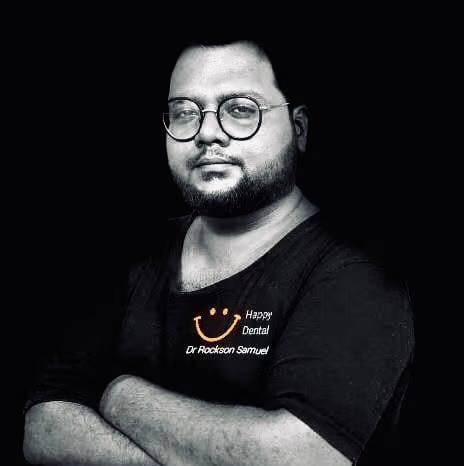
Medically reviewed by Dr. Rockson Samuel
B.D.S (RGUHS) · Indira Dental Clinic, Vellore
Reviewed 22 Jul 2026
AI-ready answer
Infrazygomatic Crest TADs: Upper Arch Distalisation: what should you know?
What it is IZC mini screws deliver whole arch upper distalisation, the maxillary answer to buccal shelf anchorage. Why it matters clinically This sits at the intersection of orthodontic movement, restorative planning and long term stability.
Summary
IZC mini-screws deliver whole-arch upper distalisation, the maxillary answer to buccal shelf anchorage.
- Topic cluster
- Adjunctive Procedures
- Also called
- IPR, elastics, attachments
- Reading time
- 5 min
- Clinically reviewed
- 22 Jul 2026
What it is
IZC mini-screws deliver whole-arch upper distalisation, the maxillary answer to buccal shelf anchorage.
Why it matters clinically
This sits at the intersection of orthodontic movement, restorative planning and long-term stability. Under-planning any of the three shows up as compromised aesthetics, unstable retention, or an over-treated case. The core biomechanics are covered in clear aligners and tooth movement predictability.
Patient-side reality
Most patients meet this concept through a chair-side conversation, not a search result. What matters practically is the sequencing question, what happens first, second and third, and how it changes the total treatment plan. See ClinCheck planning for how the plan is built.
Evidence base
Where numbers appear, they come from peer-reviewed literature (AJO-DO, Angle Orthodontist, JCO) or manufacturer multi-centre studies. Studies with n<50 or single-operator series are flagged in the body, not cited as consensus.
Signals of a good plan
- The clinician can name the sequence and defend it in one paragraph
- The refinement policy is written before treatment starts
- The retention protocol reflects the specific biomechanics of your case
- The restorative team, if involved, is aligned on target tooth positions before movement begins
See also
Invisible braces pillar, treatment cost drivers, informed consent for aligners in India.
The full picture
IZC mini-screws deliver whole-arch upper distalisation, the maxillary answer to buccal shelf anchorage. The evidence base draws from peer-reviewed orthodontic literature (AJO-DO, Angle Orthodontist, European Journal of Orthodontics), Align Technology's multi-centre outcomes data, and clinic audit records. Three realities shape the topic in Indian practice: predictability varies by movement, compliance is the hidden multiplier on every timeline, and retention is chosen at planning, never after debond.
Read this alongside the aligner movement predictability table, because the honest limits of what aligners can move are the honest limits of what this article can promise. Compliance and hygiene are covered in the 22-hour wear rule explainer.
Decision framework
- Diagnostics first. Full records, intra-oral photos, radiographs, iTero scan, periodontal chart, precede any commitment.
- Biomechanical feasibility. The predictability table is the reference for what aligners will and will not deliver in this case.
- Cost and time envelope. Treatment cost drivers sets the vocabulary; the specific case sets the number.
- Retention plan. Fixed vs removable retention has evidence on both sides; case biomechanics decide.
- Written scope. Refinement policy, retainer replacement policy, and progress-check cadence, all in writing before treatment starts.
| Phase | What happens | Time cost | Risk if skipped |
|---|---|---|---|
| Records | Photos, scans, radiographs, charting | 45–60 min | Plan built on stale data |
| Consent | Written scope, refinements, retention | 20–30 min | Downstream cost disputes |
| Delivery | First tray, chewie coaching, hygiene brief | 30–45 min | Week-1 compliance drop |
| Review | Progress vs ClinCheck at trays 10 / 20 / 30 | 15–20 min each | Late tracking failure |
| Debond & retention | Attachment removal, polish, retainers | 90–120 min | Relapse within 12 months |
Signals of a good decision
- The clinician can defend the choice in one paragraph without jargon.
- The refinement policy is written before treatment starts.
- The retention protocol matches the biomechanics of the case.
- Cost, time, and compliance expectations are documented in the patient record.
Common pitfalls
- Skipping records. A ClinCheck built on a stale scan is a plan built on a guess.
- Optimistic staging. More movement per tray is not faster treatment, it's more refinement.
- Undocumented scope. Verbal commitments become disputes at month 18. Write it down.
- Retention as an afterthought. The plan for month 24 belongs on the page you sign in month 0.
Frequently asked questions
How does this apply to my case?
Every aligner case is different, the same principle can produce different sequencing depending on crowding, bite class, and periodontal status. Book a records appointment for a case-specific answer.
How long does the process take end-to-end?
Most aligner cases run 12, 24 months from delivery to debond, with a further 12+ months of active retention. The article's specific topic can shorten or extend that envelope.
Is Dr. Rockson Samuel accepting new patients?
Yes, Indira Dental Clinic is currently accepting aligner consultations. Message +91 70106 50063 or use the assessment quiz to start.
Peer-reviewed sources
- Rossini G, et al. Efficacy of clear aligners in controlling orthodontic tooth movement: a systematic review. Angle Orthodontist, 2015.
- Papageorgiou SN, et al. Clinical effectiveness of Invisalign orthodontic treatment: a systematic review and meta-analysis. European Journal of Orthodontics, 2020.
- Kravitz ND, et al. How well does Invisalign work? A prospective clinical study. AJO-DO, 2009.
- Robertson L, et al. Effectiveness of clear aligner therapy: A systematic review. Orthodontics & Craniofacial Research, 2020.
Medical disclaimer
This article is educational and does not substitute a chairside diagnosis. Aligner suitability, sequencing, and cost depend on records, radiographs, and clinician judgement. Book an in-person or teleconsultation before acting on anything you read here.
Talk to a clinician
WhatsApp Dr. Rockson Samuel's team on +91 70106 50063 for a personalised consultation at Indira Dental Clinic, 3rd Floor, 54, Katpadi Road, Vellore.
Message on WhatsApp · Book an assessment · See pricing
Related reading
- Clear aligners primer
- ClinCheck treatment planning
- Aligner movement predictability table
- Refinement rounds explained
- Retention protocols
- Invisible braces pillar
Clinically reviewed by
Dr. Rockson Samuel, B.D.S (RGUHS), Founder, Indira Dental Clinic, Vellore. 15+ years of general dentistry, 5,000+ patients guided through orthodontic and restorative treatment. Reviewed on 2026-07-22.